
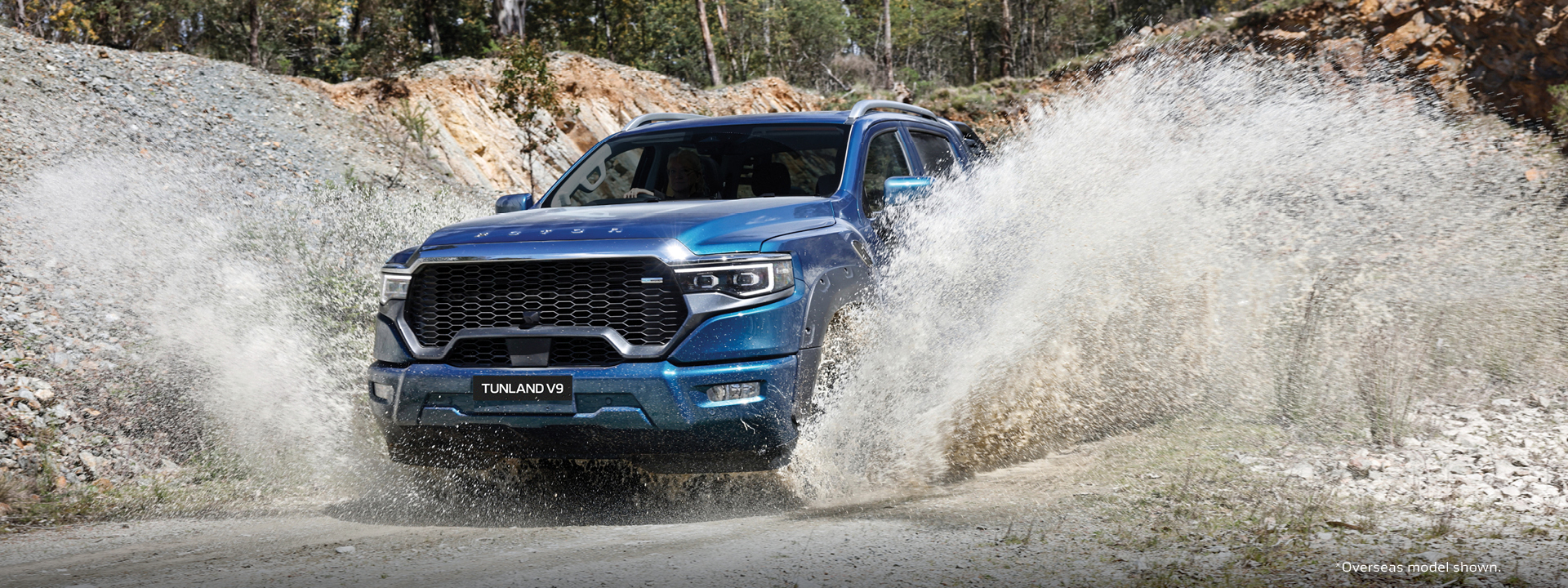
Benefits of Hybrid Utes in Australia
Hybrid ute technology is being adopted by Aussies, and when it comes to hybrid utes, many want to know whether they suit Australian conditions, and if they are tough enough for real work.
Here we take a look at how hybrid utes work, their real-world benefits, and where they fit compared to traditional diesel utes.
We also look closely at how the Foton Tunland stacks up as one of the most accessible hybrid ute options on the market in Australia.
What Is a Hybrid Ute?
A hybrid ute combines a traditional petrol engine with an electric system that assists propulsion, improves efficiency*, or both.
Hybrids still use petrol or diesel and refuel normally, which is critical for Australian distances and remote travel.
There are three main types of hybrid utes available or emerging in Australia, which are:
Mild Hybrid (48V) Utes
Mild hybrid utes use a small 48-volt electric system to support the engine.
They do not drive on electric power alone.
Instead, the electric motor assists during acceleration, smooths stop-start operation, and recovers energy during braking.
The result is better fuel economy, smoother driving, and reduced engine load, without changing how the ute is used day to day.
The Foton Tunland is a mild-hybrid ute with no charging required, no range anxiety, and no compromise on towing or payload.
Full Hybrid Utes
A full hybrid can drive short distances on electric power alone but still relies heavily on the engine.
At the time of writing this, full hybrid utes are rare in Australia, with most manufacturers jumping straight from mild hybrid to plug-in hybrid.
Plug-In Hybrid (PHEV) Utes
Plug-in hybrid utes have larger batteries that can be charged from the grid.
They can drive significant distances on electric power before switching to petrol.
Are Hybrid Utes Tough Enough for Australian Conditions?
This is the most common concern, and it is a valid one.
Rural, Regional and Outback Driving
Hybrid utes still rely on internal combustion engines. That means refuelling is exactly the same as a traditional ute.
There is no dependency on charging infrastructure in regional or remote Australia.
This makes mild hybrids especially well suited to rural use.
Hybrid systems are sealed, protected, and designed to operate in high heat and dusty environments. Manufacturers test these vehicles on corrugated roads, in towing scenarios, and in sustained high-load conditions.
Off-Road Capability
Hybrid utes retain the same fundamental hardware as traditional 4x4 utes.
That includes ladder-frame chassis, low-range transfer cases, rear differential locks, traction control systems, and appropriate ground clearance.
Hybrid technology does not replace these systems.
In addition, electric torque can actually improve low-speed control off-road, particularly on climbs or in soft terrain.
Towing and Payload
Most hybrid utes maintain the class benchmark of 3,500 kg braked towing**.
These payload figures remain close to traditional diesel equivalents, although plug-in hybrids can lose some payload due to battery weight.
Mild hybrid utes typically suffer no meaningful payload penalty at all.
How the Tunland Stacks Up
The Foton Tunland is positioned as a practical, value-focused hybrid ute, using a diesel mild-hybrid system designed for Australian work conditions.
Foton Tunland Powertrain
The Tunland pairs a 2.0-litre turbo-diesel engine with a 48-volt mild-hybrid system.
The electric motor assists acceleration, improves efficiency*, and smooths stop-start operation.
There is no plug-in charging requirement.
The vehicle operates exactly like a conventional diesel ute, and this approach suits buyers who want hybrid benefits without changing how they use their vehicle.
Towing, Payload and Off-Road Capability
The Tunland offers competitive braked towing capacity, near 1,000kg payload figures, and proper 4x4 hardware including low-range gearing and rear differential locking.
Importantly, the hybrid system does not compromise these fundamentals.
The Tunland remains suitable for towing caravans, trailers, plant equipment, and work loads^.
Fuel Economy
The mild-hybrid system improves real-world fuel efficiency compared to traditional diesel utes of similar size and weight.
Over high annual mileage, this reduces operating costs without introducing charging complexity or range limitations.
Safety and Technology
The Tunland is equipped with modern driver-assistance systems, including autonomous emergency braking, adaptive cruise control, lane-keeping assistance, and blind-spot monitoring.
Interior technology and comfort levels are closer to SUV standards than older-generation work utes. This matters for drivers who spend long hours behind the wheel.
*In comparison to petrol-only variants. Real world results may vary based on individual driving circumstances e.g. traffic conditions, driving style, vehicle modifications, fuel quality, climatic conditions etc.
**Towing capacity is subject to regulatory requirements, tow bar and vehicle design and towing equipment limitations. If the towing mass is greater than 2,000kgs, an Electric Brake Controller must be fitted and is only capable of towing a trailer with a maximum of 2 axles. Requires fitment of optional tow bar accessory. Refer to Owner’s Manual for towing instructions. For further information, ask your local FOTON Retailer.
^Refer to Owner’s Manual for towing instructions. For further information, ask your local FOTON Retailer.